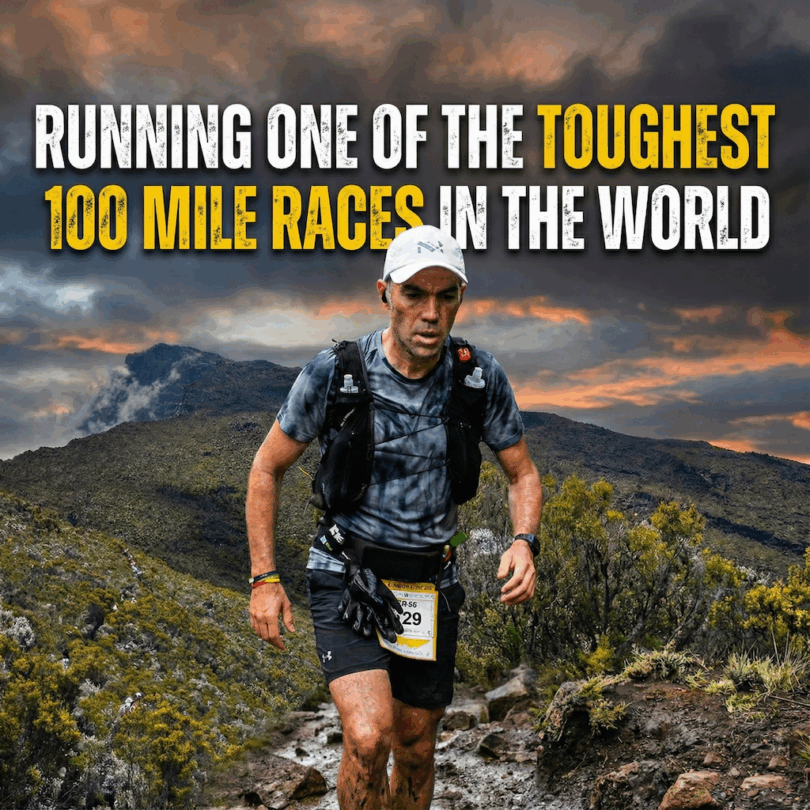

Well, here we go! I have a video below that gives the whole race review but I’ll say a few things here in the post as well for those that may not want to watch it. This post is a look at the Grand Raid Diagonale des Fous on Réunion Island, what is recognized as one of (if not the) toughest 100 mile races in the world. It was a really cool experience but one I will not be repeating. 🙂
Running the Grand Raid on Réunion Island
Réunion Island
For those that don’t know where Réunion Island is or you never heard of it, it is what is called a “foreign department” of France and is located deep in the Indian Ocean, a few hundred miles off the coast of Madagascar. Many people in the miles and points space may be more familiar with another nearby island, Mauritius, for their resorts.
Réunion Island does not have all those resorts, in fact, the residents of Réunion typically go to Mauritius for vacation so these flights can be some of the more expensive ones in the world on a cost per minute. It is only like 20-30 minutes and flights can be over $300 for that flight on some days.
Réunion Island has close to 1 million people and the language is French. I mean, it is really French – not much English spoken at all, at least in my experience on the island. If you go to Réunion, you better be at least a little familiar with French because you won’t get far in English.
I have a friend who lives there and asked me if I wanted to run this race with him. Even though I am very familiar with many of the popular 100 mile races in the world, I had never heard of this one. I looked it up and found it is incredibly popular on the island, being one of the most exciting events of the year. This is saying something too since the people here are really into fitness and outdoor activities. There are races many weekends of the year.
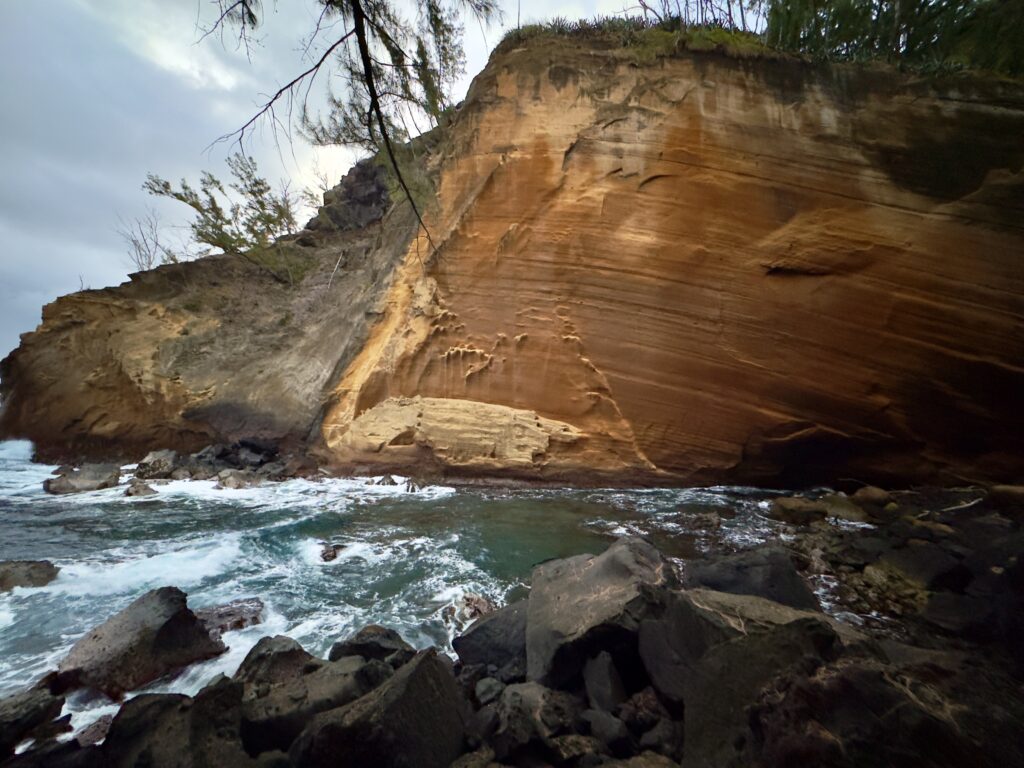
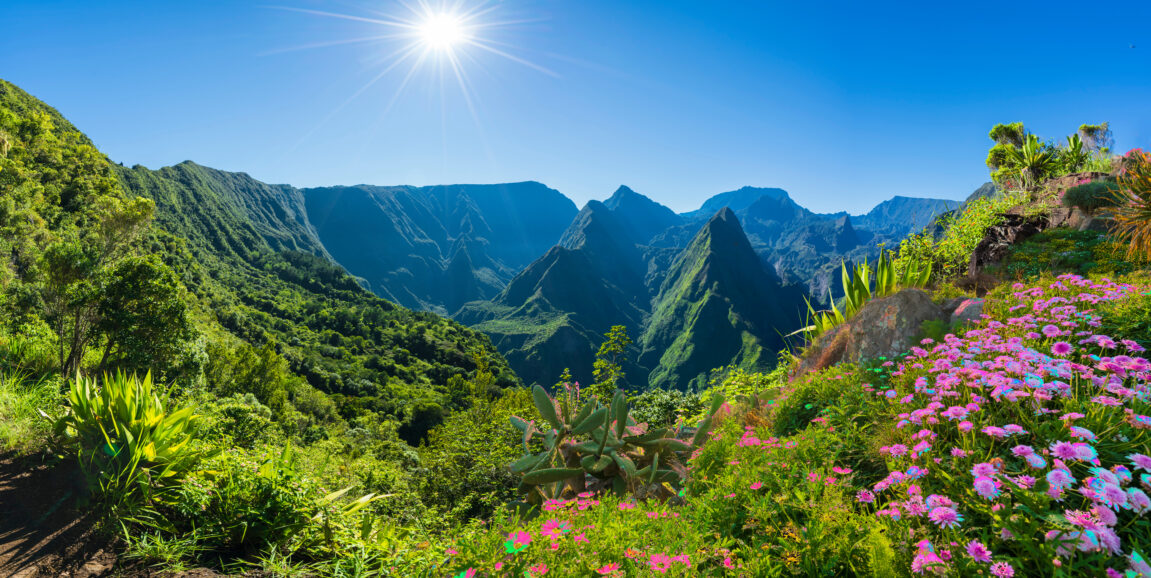
Some of the beautiful landscape on the island
It is also very big in France and in Europe. They cap the race at 2,800 runners and have to hold a lottery for people to get in. They allowed something like 150 people outside of Europe, Reunion, etc. I was one of 5 Americans who toed the starting line. Just 5 Americans – that tells you how little known this race is in America.
I watched a bunch of videos about the race and only a few were in English as not many Americans have ever traveled and run this race.
Traveling to Réunion Island
This was the fun part of the planning (not that running 1,000+ miles in training wasn’t fun!). The twist was that my family and I were returning from a couple of weeks in Europe the Friday before I had to leave. I had to be back in town so couldn’t just stay in Europe, which would have made things much easier. Instead, we flew home from Europe on a Friday, arrived home at midnight, and I flew out again on Sunday afternoon.
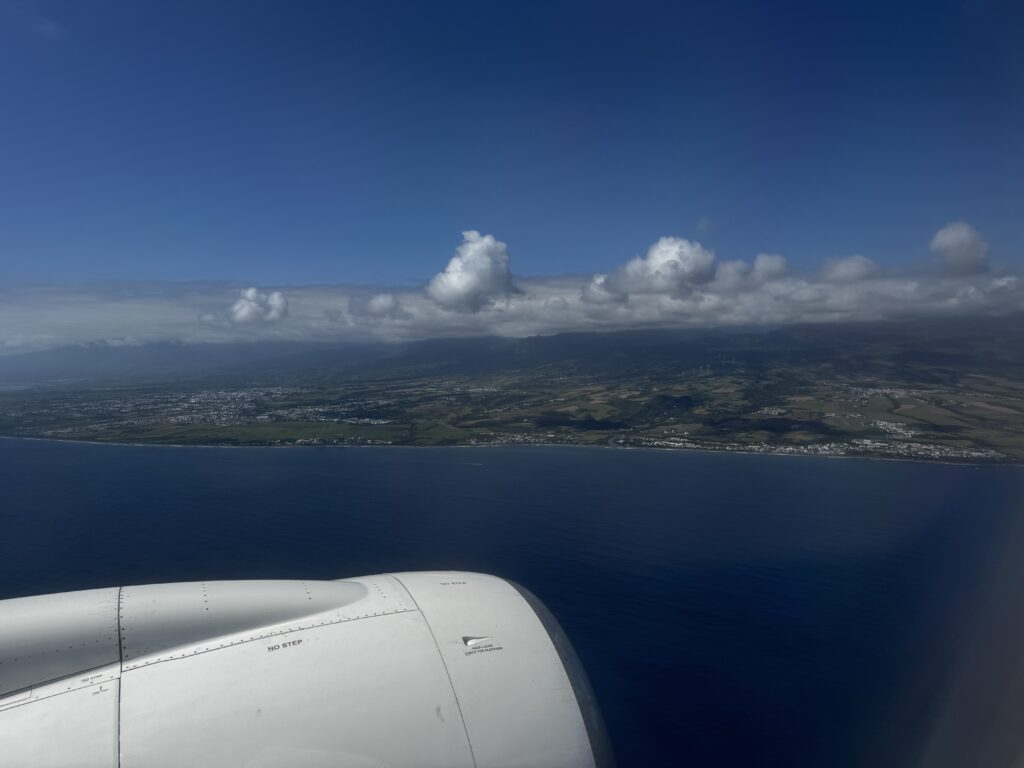
Reunion Island
I had transited Zurich on Friday and arrived back in Zurich again on Monday so that was a lot of travel in a short space of time. I flew from Rochester to JFK (on JetBlue), JFK to Zurich (business class on SWISS), Zurich to Paris (business class on Air Baltic), Paris to Mauritius (business class on Air Mauritius), and Mauritius to Réunion on Air Austral.
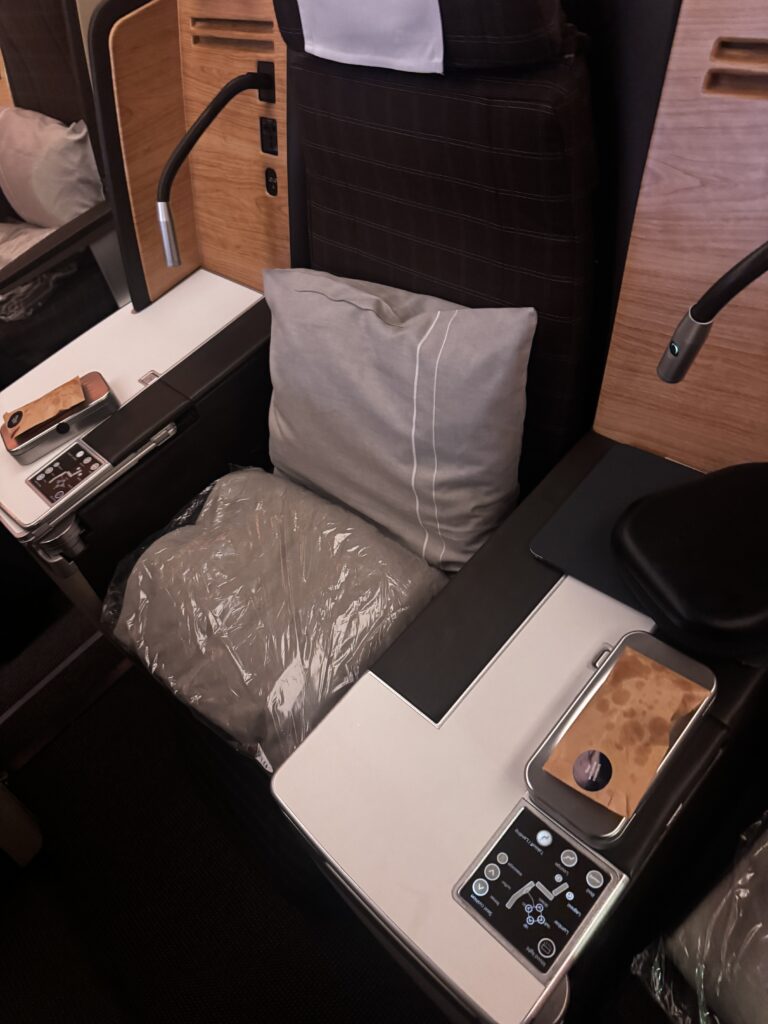
SWISS business class for JFK-ZRH
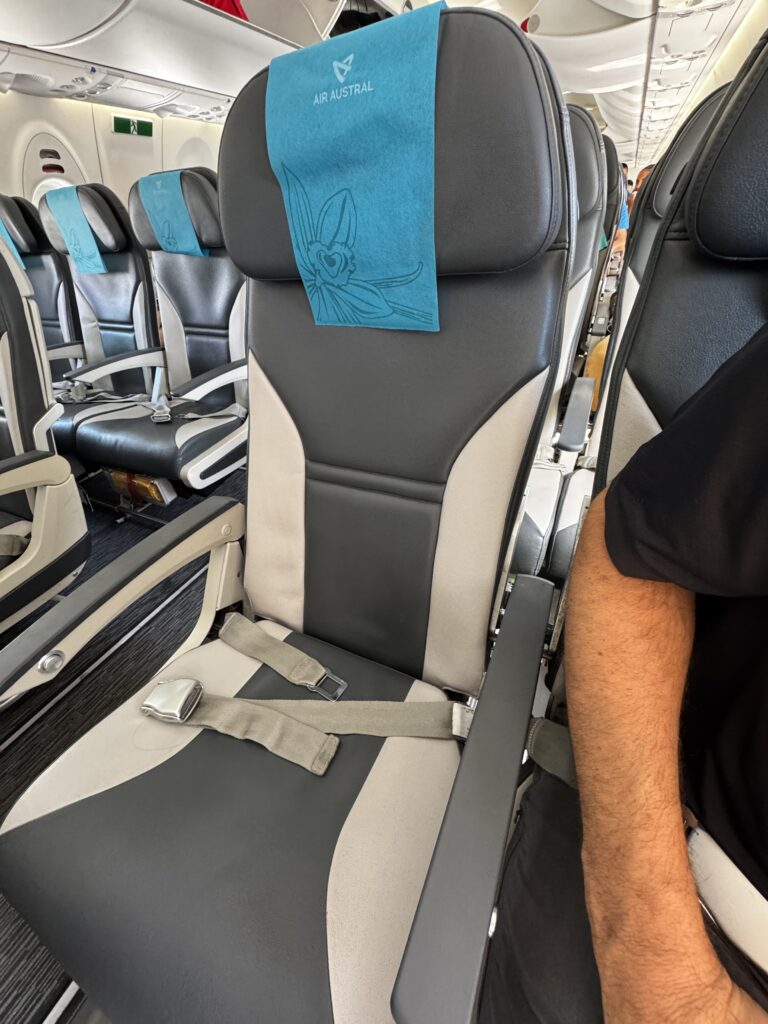
Air Austral from MRU-RUN
That was 5 flights and 5 airlines in the space of 37 hours! I arrived on Réunion Tuesday morning and my friend picked me up and we drove to the other side of the island where he lived (and where the starting line would be).
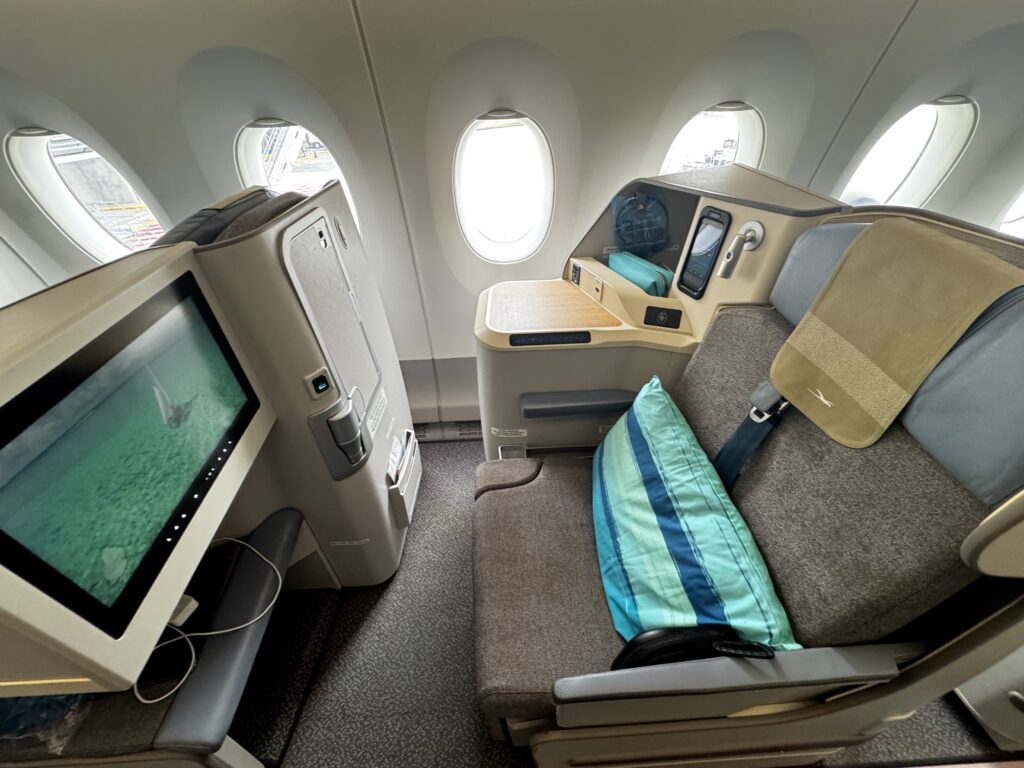
Air Mauritius business class from CDG-MRU
I’ll have flight reviews coming soon.
The Packet Pickup
Since this is such a giant event for the island, it was pretty packed at the packet pickup. It was open all day Wednesday, the day before the race, and we were still there for 3 hours because of the lines. We had to show our packs we were running with for approval before getting our bibs because we had a bunch of required equipment we had to carry for the race since we were going to be out in very isolated areas.
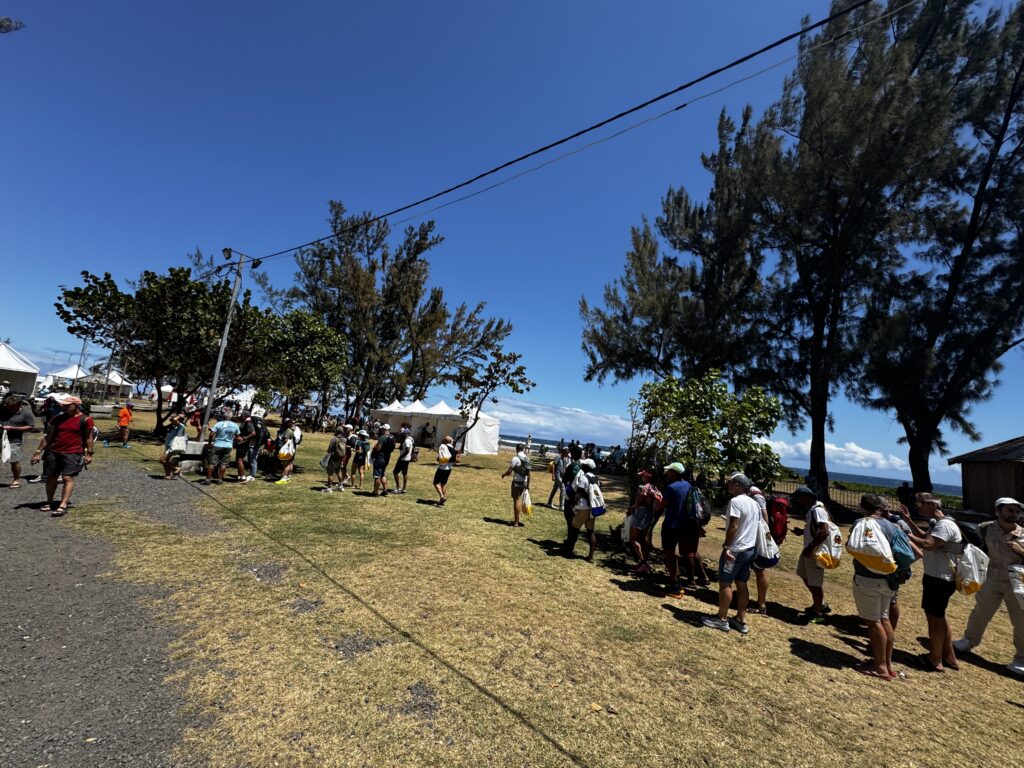
The packet pickup
Pretty cool vibe in the whole area, though, as it really helped to get you pumped up for the race. Remember what I said about French? I was so glad I had my friend with me because no one I interacted with spoke English and I only had a few French words. They do have translators available but I didn’t get one since I had my friend with me.
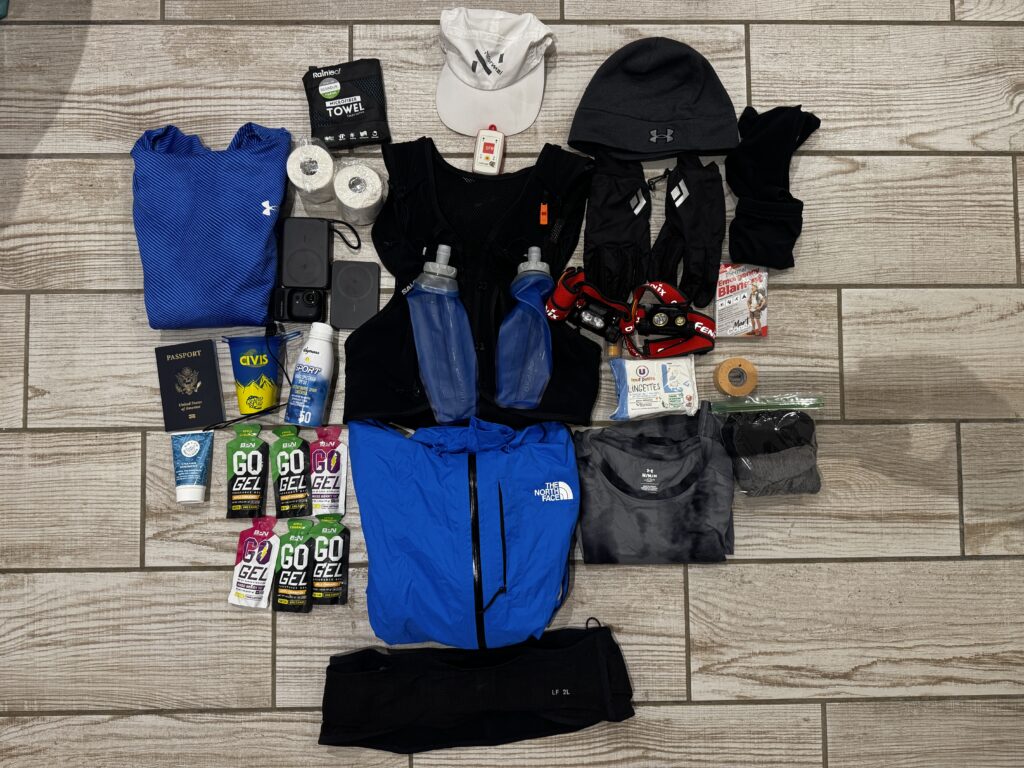
The gear I had in my running pack
At the packet pickup, we had our bracelets put on that we couldn’t take off until the race was over or we dropped out. One of them showed what starting corral we were in. Apparently, they only used one of my qualifying races for this (I had run 2 50 mile trail races within two weeks to be able to qualify) and it was my slowest 50 mile race ever (13 hours). That put me in the last corral (number 4). If they had used any of my other races, I would have been in 3 or likely even 2.
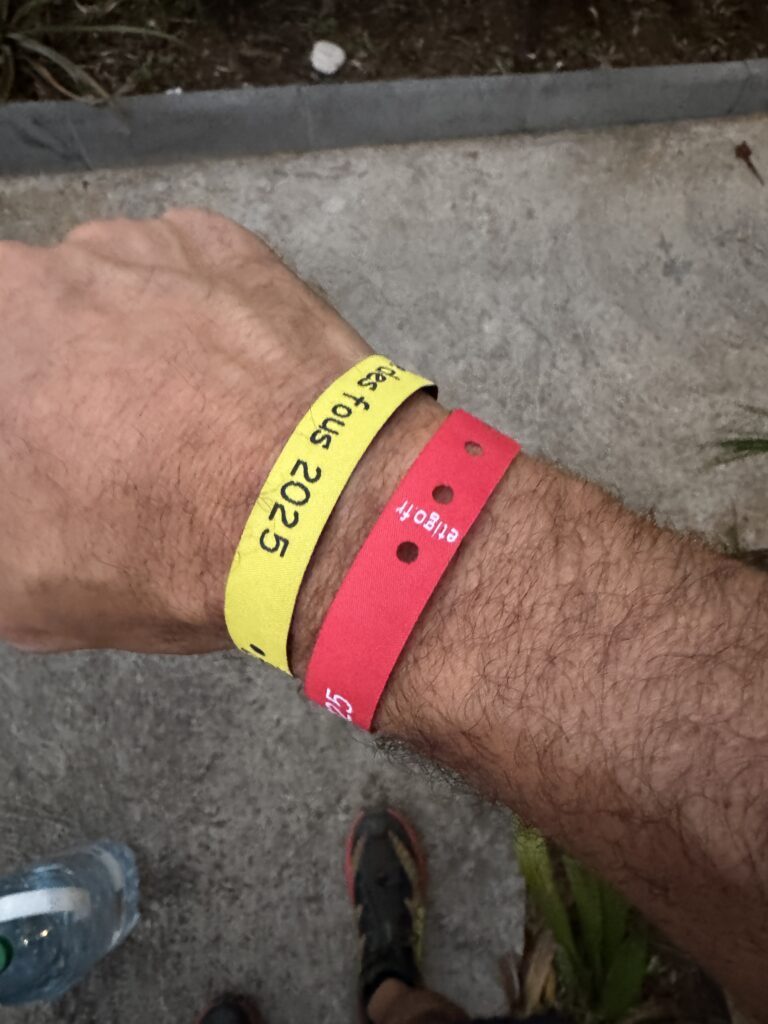
Wristbands for the race
My friend, thanks to the fact that he is a very fast runner (sub 2:50 marathoner and 10 hour 100K runner), was in corral 1. But, he really wanted us to do this together so we would start together in my corral.
Race Day
They do what they can to try and make this as difficult a race as possible. That means things like starting at 10PM and not allowing trekking poles, even though they would have been incredibly helpful!
The 10PM start was tough. I had tried to devise a sleeping plan to get me as prepared as possible. I went to bed Wednesday at 11PM and set my alarm for 3:30AM. I woke up then and did some work and fell back asleep at 7AM but only slept until 10AM. That was not going to be good since it meant I would be awake for 12 hours by the time the race started!
I did more work and my friend and I met up at 3PM to get ready. Our bus to the race start (definitely something to do and worth the €5!) was going to leave around 7PM. We ate, got ready and headed over to the bus pickup. The sun set there around 6:30 so it was already dark.
When we got to the race start area, it was packed and the energy was really high! We tried to sleep a bit but that didn’t happen and before we knew it, we were in the starting corrals.
The first 3 miles of the course are on the streets and are the easiest part of the whole course. It starts to climb pretty quickly and then you are climbing for like 30 miles.
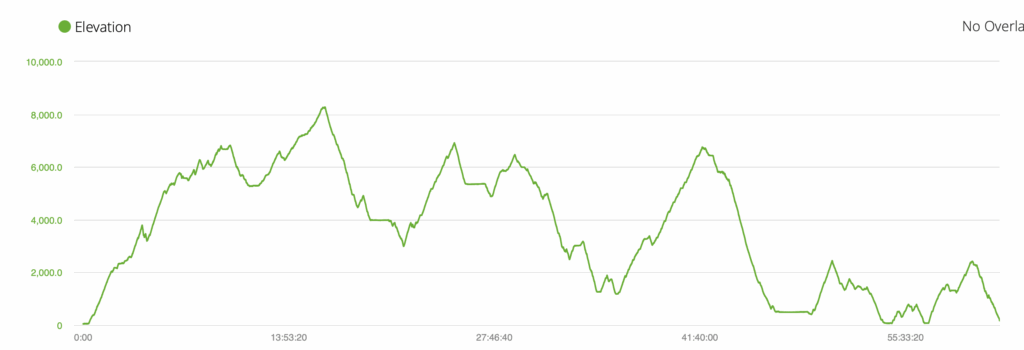
The elevation profile – over 36,000 feet of gain!
Our plan had been to shoot for sub-50 hours, which would be a respectable first time. We were told to not have a time goal for our first, though, because inevitably we would hit a spot where we would see the goal fade and we would lose the energy to go on and drop.
We found out that this happens a lot at the aid station around mile 50. The reason is that it is the last aid station before climbing the 4,500 feet to drop into the Mafate cirque, an area where we would run for 20-30 miles with the only way in or out being by foot or helicopter. So, that aid station has people rethinking going on into such conditions.
We were doing ok early on and easily staying ahead of cut-off times (which were pretty aggressive early on in the race). We were with big lines of runners for probably about 12 hours. The views were awesome when the sun came up.
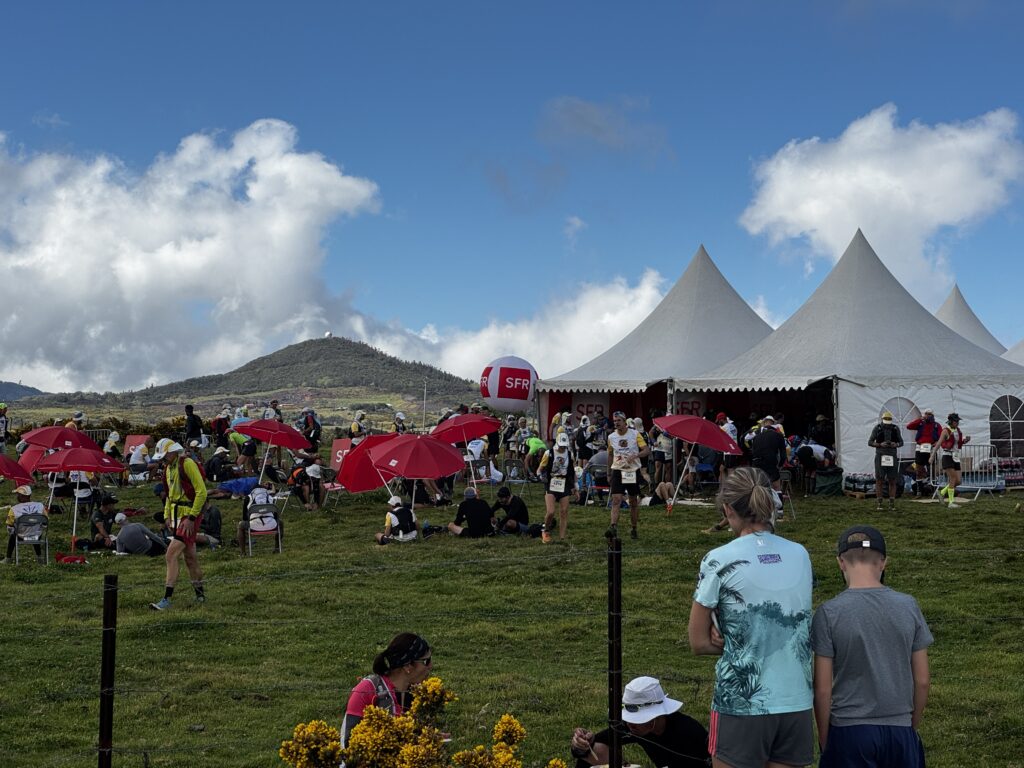
An aid station
There were plenty of aid stations along the way. The longest distance between aid stations was like 12 miles with most averaging 7 miles. The problem I encountered is that the food stocked at these aid stations was much different than what I am used to. My go-to food for ultramarathons is stuff like grilled cheese, quesadillas, gummy bears, Pringles, pickles, ramen – stuff like that. Since anything imported to the island is very expensive, the aid station food was all local stuff. This meant a lot of fruit, which was great, but nothing like I was used to. They had a lot of cheeses which were stronger than what I was used to. The bread products were either tasting stale or required too much chewing which made me gag and feel like throwing up.
But, there were a few aid stations (like the one above) that had food like chicken, rice, and pasta. This was great! The aid station above is one we were at around 9:30am – didn’t matter it was breakfast time, I had this meal here. 🙂
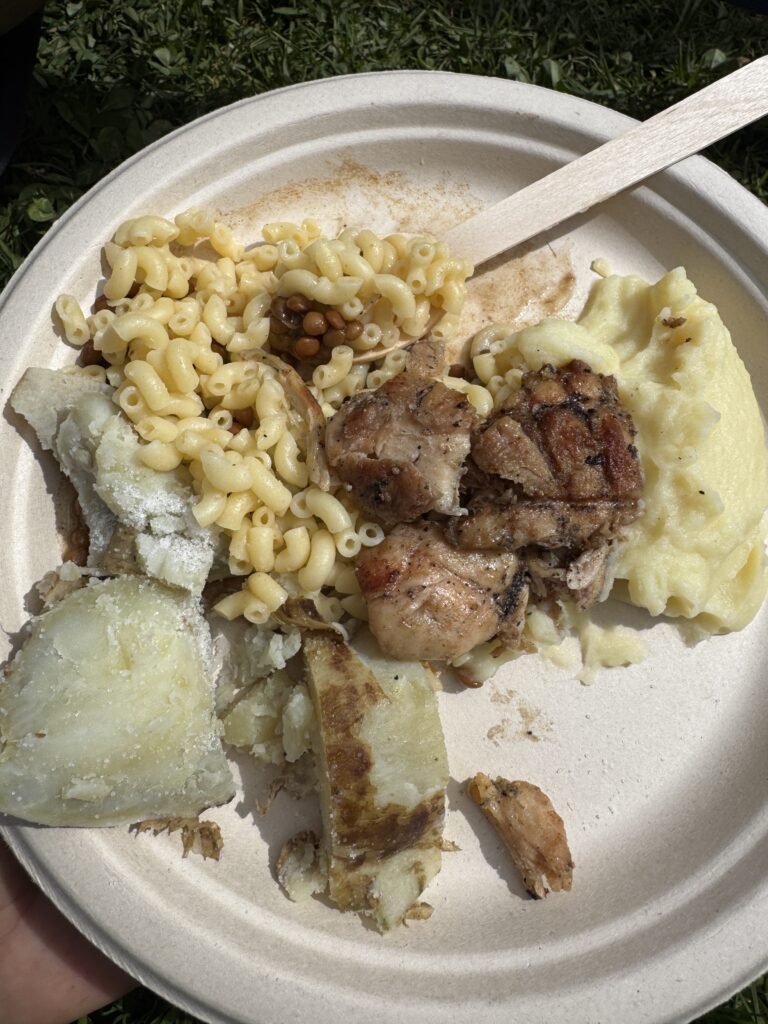
Some of the food at aid stations
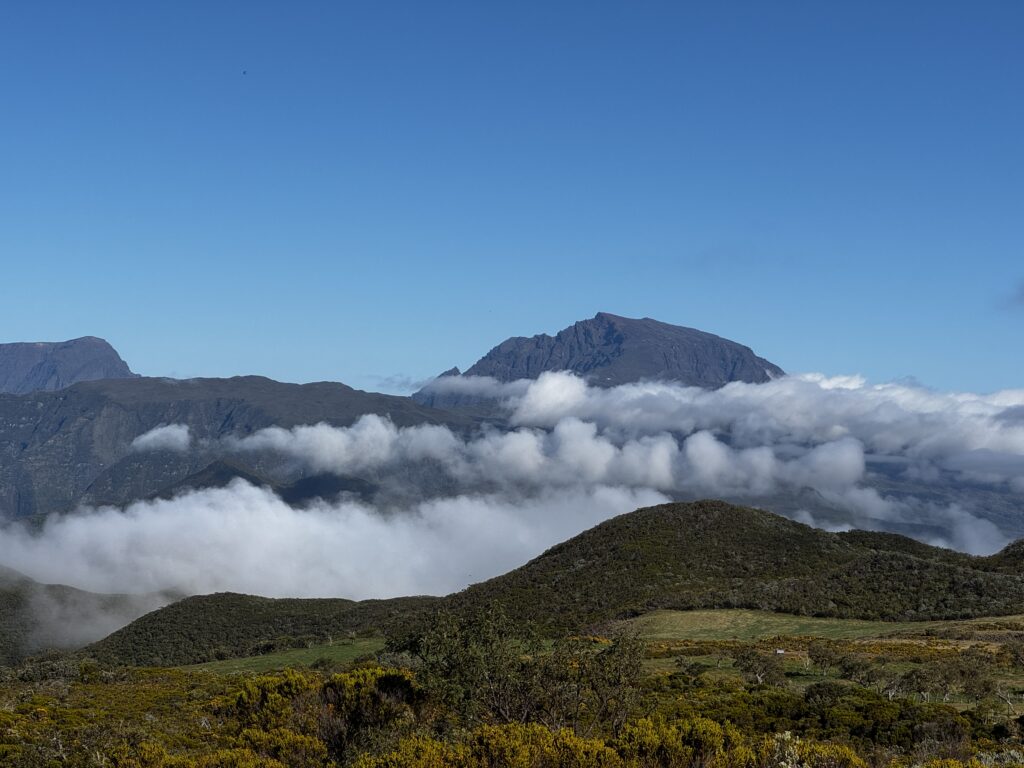
Views were great!
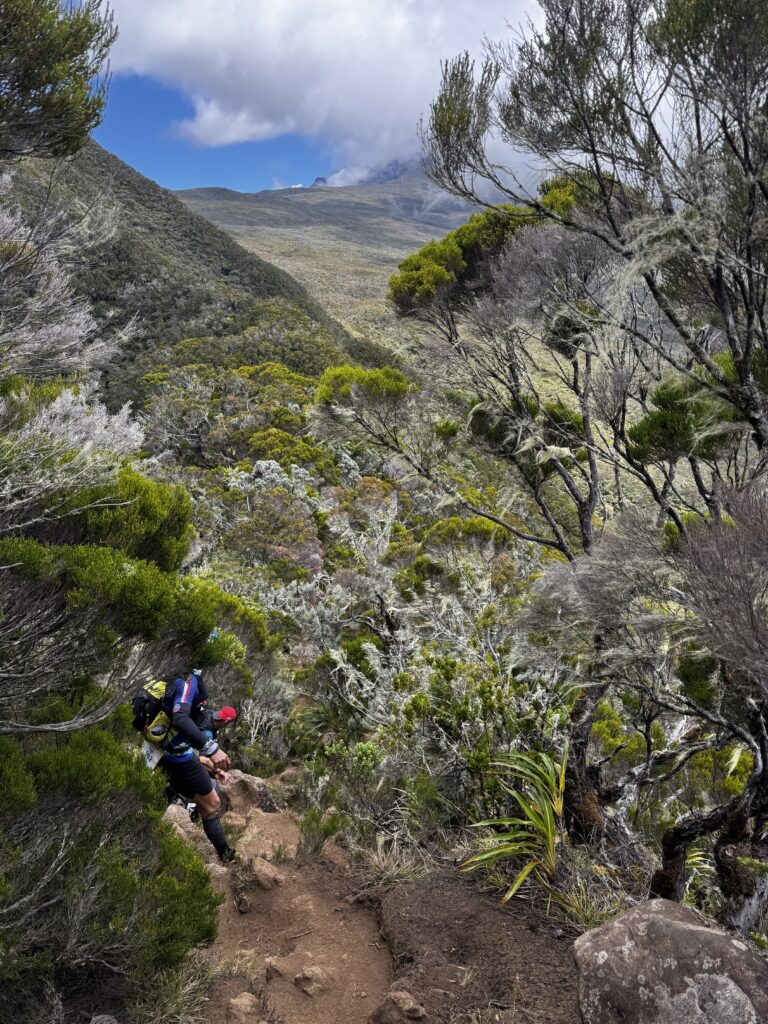
We started at sea level and went up to over 8,000 feet. We spent a lot of the race above 5,000 feet and some of that time was in the clouds.
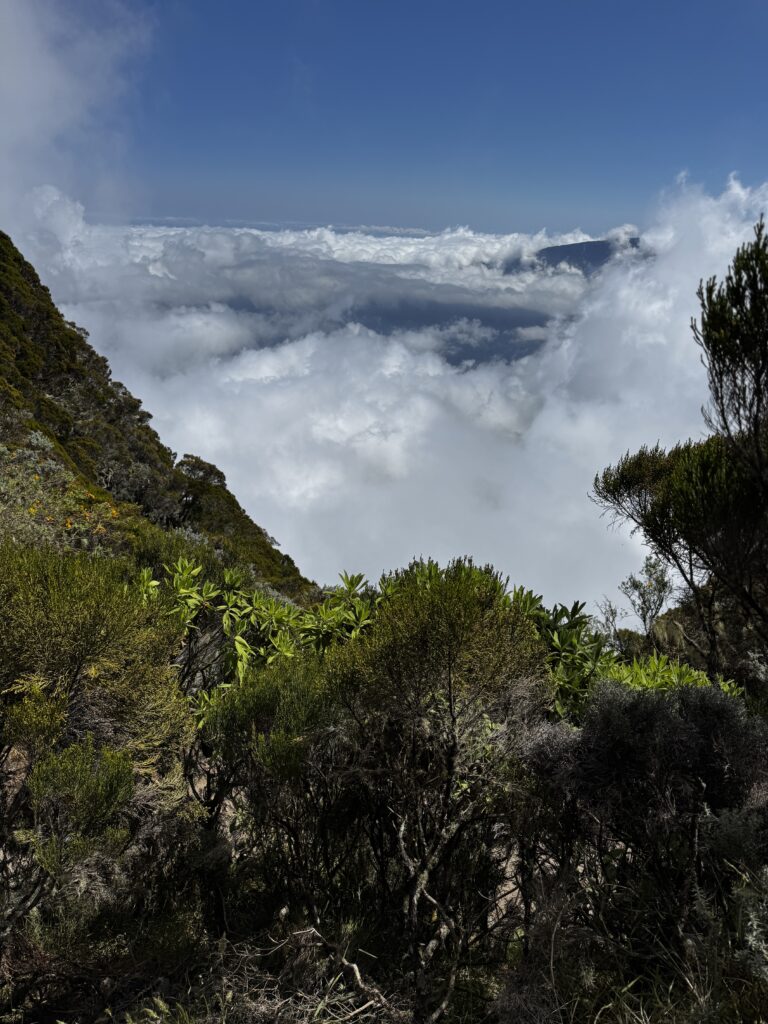
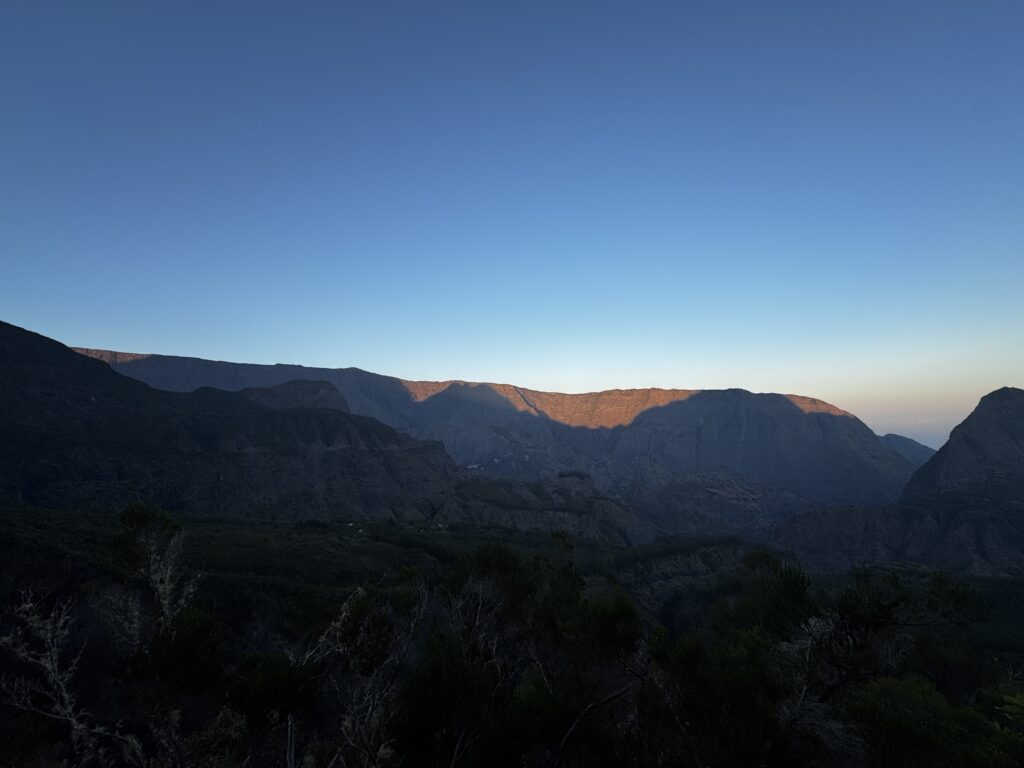
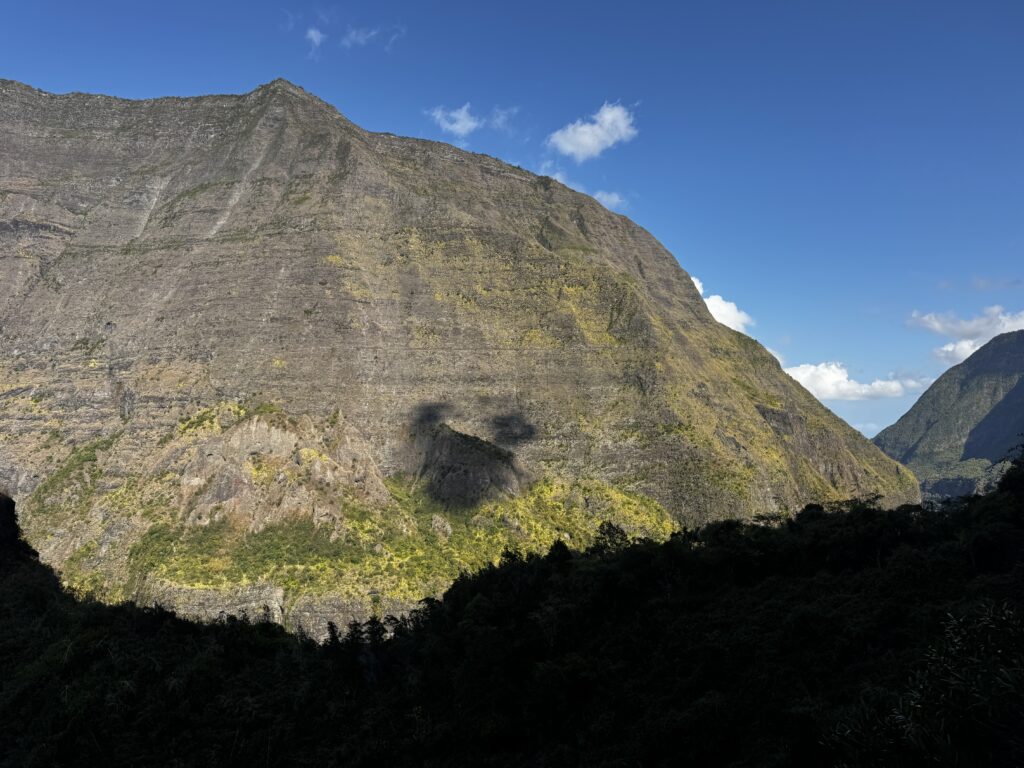
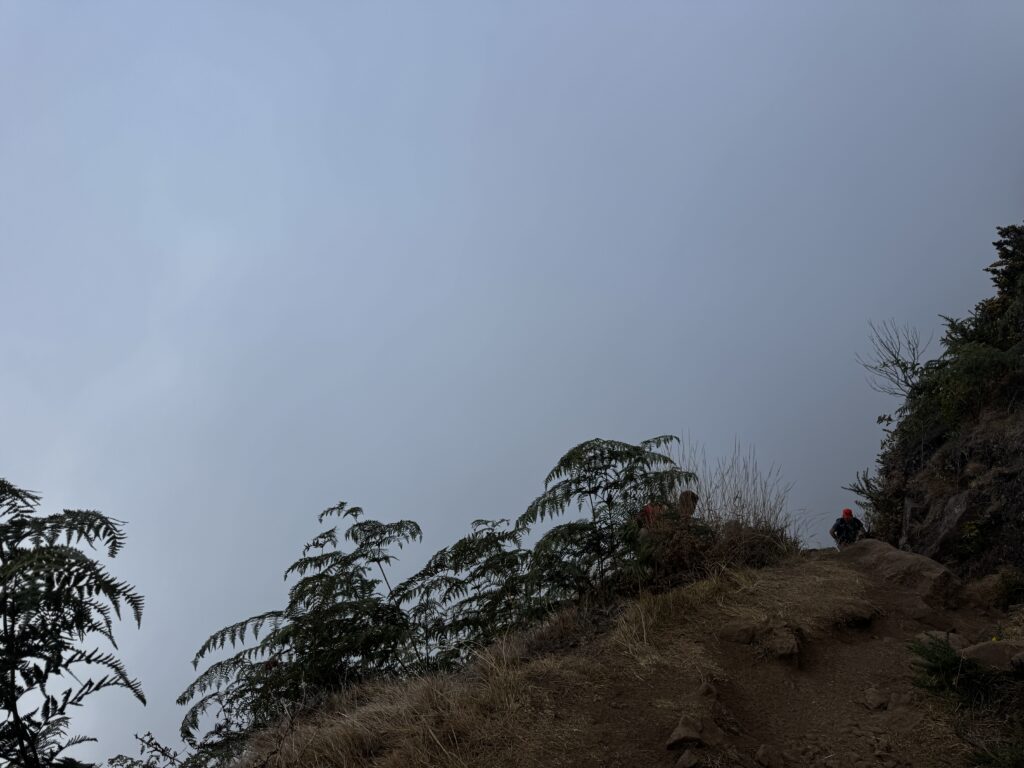
This part was called the Maido – an incredibly difficult route of around 6 miles and 6,600 feet of climb to get out of the Mafate. The last 2 miles had 2,500 feet of gain.
You can see a lot of footage from the race in the video as well as breakdown about the race so I won’t spend thousands of words doing it again here.
But, around mile 44, I got my foot stuck in some boulders and was moving forward to it pulled it. I messed up some tendons in my right heel and it affected my ankle. I spent the next 6 miles to the aid station pretty convinced I was going to drop out because I couldn’t run and it hurt to walk. After that aid station, we would have to go into the area only accessible by foot or helicopter so I didn’t think I would make it.
But, with encouragement from my family and a great doctor and team who wrapped up my foot really well, I decided to keep going. I knew that sub-50 hours was out now. All I had to do was focus on trying to finish, no matter how long.
And it took a long time! I couldn’t really run much (and only 30% of the whole course is runnable anyway!). Also, I was dealing withe extreme sleep deprivation. I tried to sleep on night two but it was so cold and my jacket was sweaty a bit so I was shaking uncontrollably for the whole 40 minutes I lay there and never fell asleep.
As a result, I ended up being awake for 60 hours before I was finally able to fall asleep for 30 minutes. That meant I was dealing with some strong hallucinations along the course (captured in the video) and imagining all kinds of things. It was pretty wild and I definitely wouldn’t recommend staying up that long – especially while running a 100 miler! When I finally did get to fall asleep, I had only slept for 35 minutes in 73 hours!
I ended up running alone for 30 hours after I released my friend to go on ahead. He was doing great and I didn’t want to hold him back (he finished 8 hours ahead of me). So, there was a lot of time just by myself but I didn’t mind it. It was beautiful countryside and wonderful people along the way.
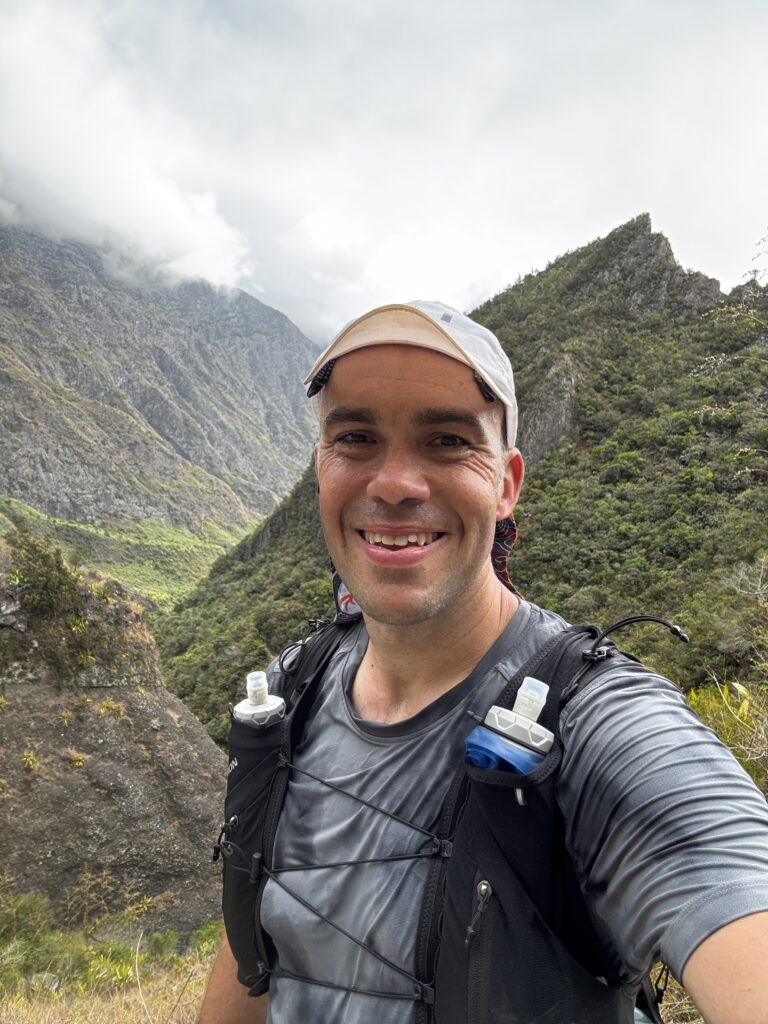
Near the top of the Mafate
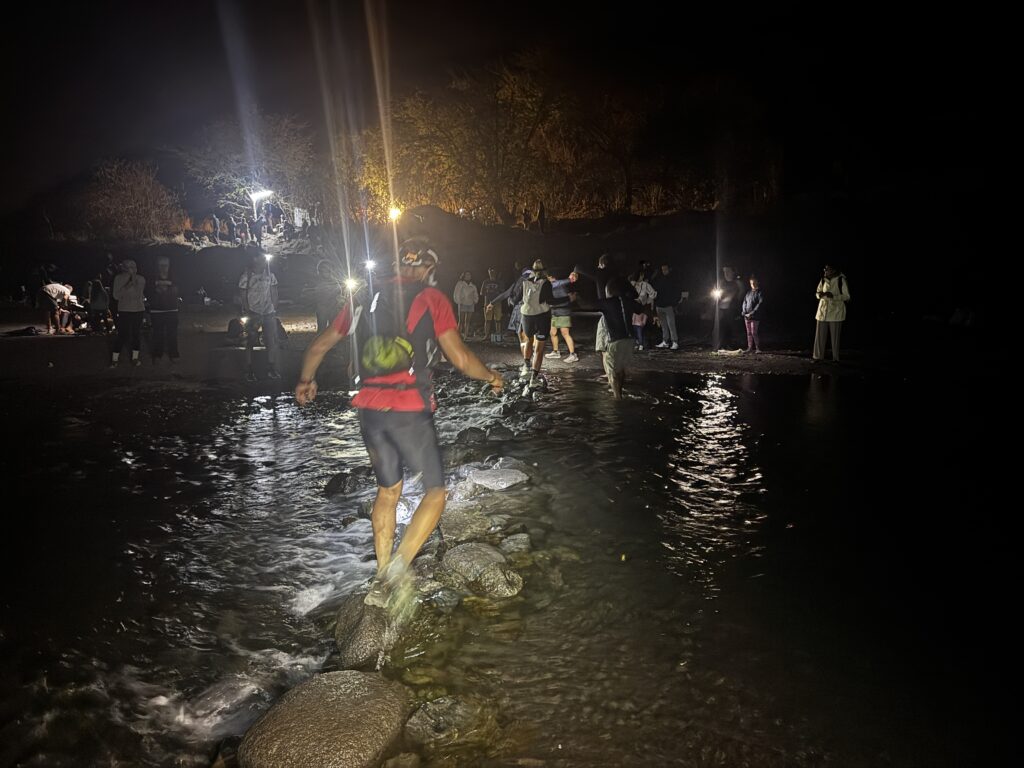
Several river crossings throughout the course
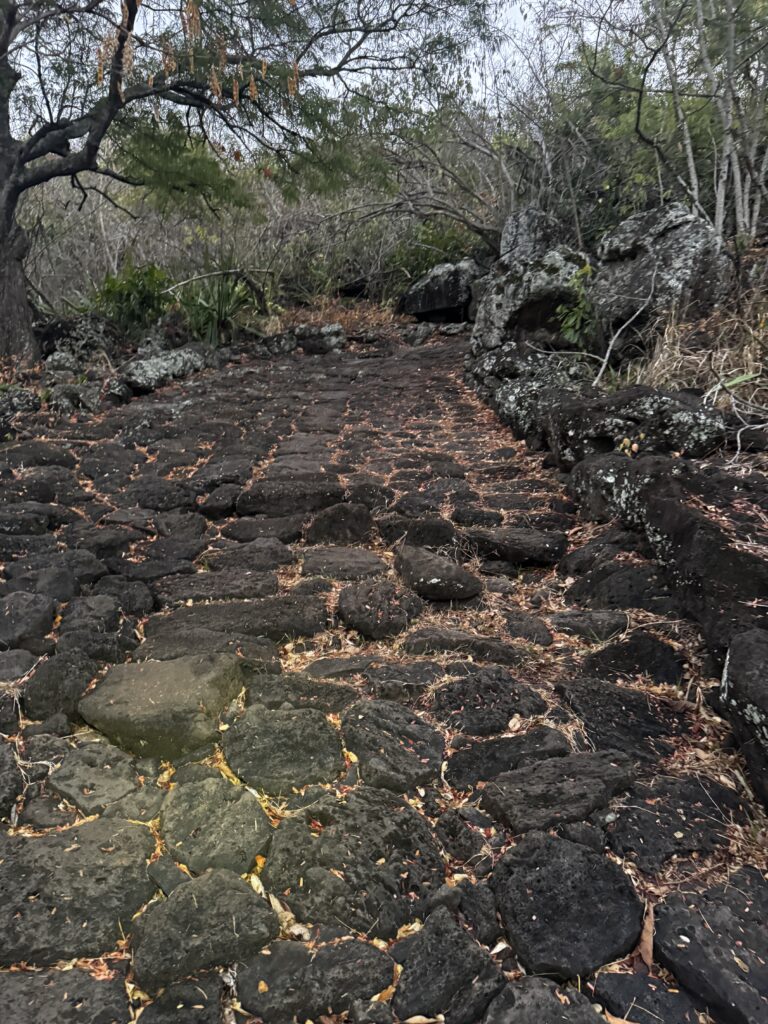
Several miles of being on lava rocks, some flat like this and many pointy and jagged
Because I had to adjust my walking for my foot, it ended up messing with my other foot and the ONE AREA I forgot to put my anti-chafing gel back on after mile 50 was the ball of my left foot. And I got some pretty big blisters that hurt with every step.
Normally, I would pop it, drain it, and bandage it but the aid stations I stopped at couldn’t help me due to the language barrier or not having clean needles. So, more pain but what was I expecting in a run like this? 🙂
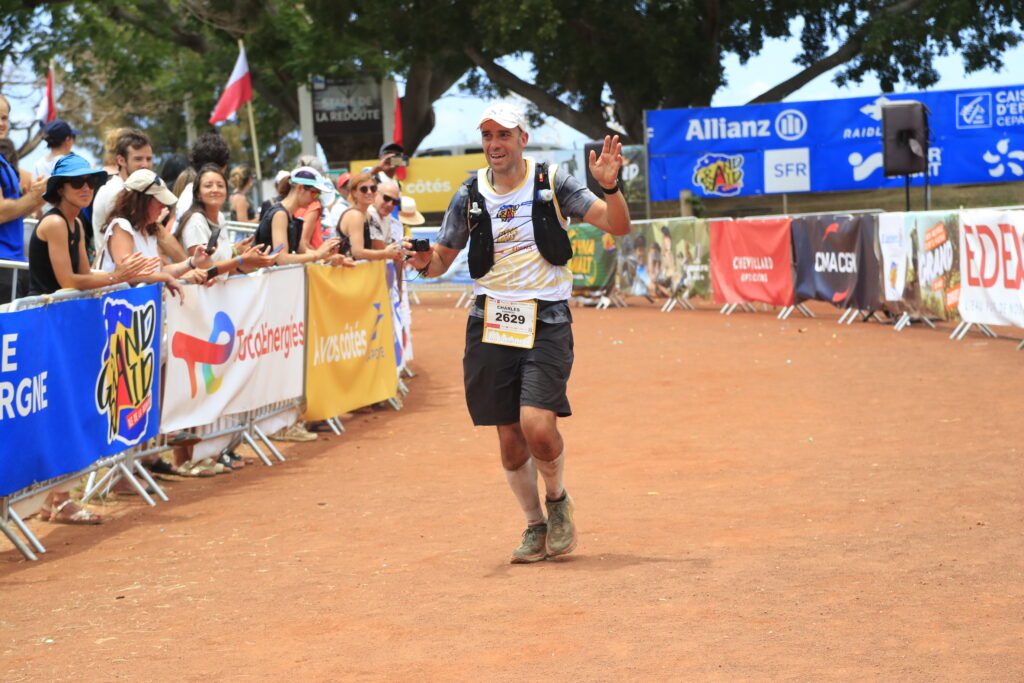
The finish line
It is hard to explain how emotional it was to finally reach the finish line, almost 62 hours after starting. Not sleeping helped with the emotional part 🙂 but it was such a journey and I had encountered so much that it was really an adventure of a lifetime.
It was much slower than I had planned but I am very happy that I kept on to finish. I had to take a month off from running as I had some really tough spots worked out on my calf but I was glad to have finished.

Returning Home
The tough part was I had to go right from the finish line to the airport to catch my flight. 🙂 They had waitlisted me so I wasn’t even sure I would have a seat. Fortunately, wearing my finisher medal (and I had not even had time to change so I looked like I did above) helped and with congratulations and a smile, I was even upgraded for the short flight to Mauritius. 🙂
From Mauritius, I flew to Zurich on Edelweiss Air and then Zurich to Washington, DC on SWISS, both flights in business class. I had a banquet I needed to attend within 2 hours of landing in DC so I couldn’t take my rest in a bed until that night. 🙂
It was a great overall experience. I am going back to Reunion in April and we will visit some of the areas again but I will not be running this race again. It was enough to do it once. I cannot even begin to properly train for that race with the area I live in and there are plenty of other races to tackle! Next up – the Mamba 100 in Memphis next November. It was my first 100 miler and now I am going back to try and break 24 hours.
Thanks for reading along! I had some shorter posts coming out with reviews and some things from the trip. But, if you can handle the time and want to watch it all, the video gives you much more than I could here!
I have to close by saying that the people of Reunion Island are just amazing! They were so gracious with me in my lack of French and helping and cheering all along the way. The people and the landscapes are certainly with a reason to visit – just brush up on your French or bring along a French-speaking friend to get the most out of it. 🙂